How does the Finnish school system prepare children and young people for a world shaped by climate change? Understanding the nature of climate change remains incomplete if its diverse impacts on people’s lives in different parts of the world are not addressed throughout the educational journey. According to the HUMANE-CLIMATE research project, transforming Finns from climate change bystanders into citizens who promote climate justice and planetary responsibility requires social science based climate change education that fosters empathetic understanding.
What is climate change, what causes it, and what impacts does it have? In response, Mmany students would start describing the greenhouse effect and global warming: as the concentration of greenhouse gases in the atmosphere increases, heat is trapped on Earth, leading to rising temperatures, sea-level rise, and more frequent extreme weather events. While this natural science account is accurate, it does not capture harmful effects of climate change on people’s everyday lives. Hurricanes, typhoons, and wildfires, as well as more gradual changes in living conditions – such as drought and food insecurity – are already making life and livelihoods unsustainable in many places. Most importantly, a natural science account overlooks the injustices associated with climate change: those places and communities that have contributed the least to causing and advancing climate change are often the ones that suffer its consequences the most.
The unjust nature of climate change is rooted in the history of industrialisation, which is widely recognised as one of its underlying causes. Industrial development was made possible to a large extent by the growing wealth of European colonial powers, built on the exploitation of natural resources and labour in other parts of the world. These power relations continue to shape the present in many ways. Wealthier countries are generally better equipped to respond to the impacts of climate change, while its most severe consequences are felt in poorer regions. Industrial production is also distributed unevenly across the globe. Polluting factories are often located in areas with low-cost labour, while the benefits accumulate to large corporations based in wealthier countries and to their home economies. From a climate justice perspective, this broader system of unequal relations can itself be seen as a root cause of climate change.
The HUMANE-CLIMATE research project brought these perspectives into environmental education in Finnish and Greek schools. It focused on climate mobility – human movement linked to climate change – as a complex and multifaceted phenomenon. Climate mobility is one of the most significant ways in which the impacts of climate change are experienced in people’s lives. As living conditions deteriorate and livelihoods become more difficult to sustain, people may move seasonally to another region or country for work and residence. Others migrate from rural areas to cities in search of better opportunities. Among those fleeing sudden crises, some settle permanently in new locations, while others eventually return to rebuild their homes. Some communities choose to remain where they are, even when doing so requires substantial efforts to maintain viable living conditions. At the same time, some people are unable to leave because they lack the financial resources or the necessary knowledge and skills to do so.
In the environmental education of schools, climate change is mainly presented as a phenomenon detached from people’s everyday lives.
Climate change is driving human mobility around the world, yet many privileged people hardly notice this in their own lives. For example, living across multiple locations is common among Finns. During summer heatwaves, for example, many urban residents spend extended periods in rural areas by lakes, rivers, and the sea. In winter, people travel to places with reliable snow conditions or head further south in search of milder warmer weather. Simultaneously, other Europeans experiencing increasingly intense summer heat have begun to see Finland as an attractive refuge for spending the warmer months, either on holidays or in remote work. Many people in such privileged positions, however, do not recognise that they are themselves exercising the possibility of climate mobility. By contrast, those whose movement is restricted or whose financial circumstances do not allow them to relocate bear the burden of immobility every day.
A comparative analysis of primary school curricula and textbooks found that the Finnish education system largely overlooks migration as a topic. The contrast with Greece is striking, as human mobility receives considerable attention there, both in historical contexts and in relation to contemporary society. Climate mobility, however, is not addressed to any significant extent in school education in either country. One reason identified for this gap is the strong emphasis on natural sciences in environmental education: climate change is mainly taught within STEM subjects (science, technology, engineering, mathematics) and is often presented as a phenomenon detached from people’s everyday lives. Schools also place little emphasis on climate change as a shared responsibility of societies or as an issue requiring collective stewardship of the planet. Likewise, educational materials devote limited attention to the responsibility of the wealthiest countries, whose historical and current activities have contributed most to the root causes of climate change. In addition, the harmful effects of climate change are often portrayed as distant from children’ and young people’s own lives, as threats lying in the future or as disasters occurring elsewhere in the world.
To explore the possibilities of social science based environmental education, the HUMANE-CLIMATE research project worked hands-on with schools in Finland and Greece, using arts-based approaches to foster empathetic climate change education. The aim was to help students develop a deeper understanding of the diverse circumstances and living conditions in which climate change is heavily present in people’s daily lives around the world.
Image: HUMANE-CLIMATE research project
Bringing empathy into climate change education
In its climate change education activities conducted in schools, the participatory research in HUMANE-CLIMATE sought to create opportunities for students to develop an empathetic understanding of migration linked to climate change. Together with fourth-grade students, the research team engaged in a shared learning process, exploring how the difficult experiences of people living in different parts of the world – as well as their everyday sources of joy and resilience – can help make climate change understandable as an issue embedded in ordinary life. The aim was to foster respectful and equitable understanding, avoiding relationships based on pity and instead emphasizing listening to the experiences and perspectives of local people. Another pedagogical objective was to challenge preconceptions about climate change and prevailing ways of thinking within Finnish and Greek societies. This transformative process may give rise to feelings of discomfort, but engaging with such emotions is intended to support a willingness to act for a more just world in an era of climate change.
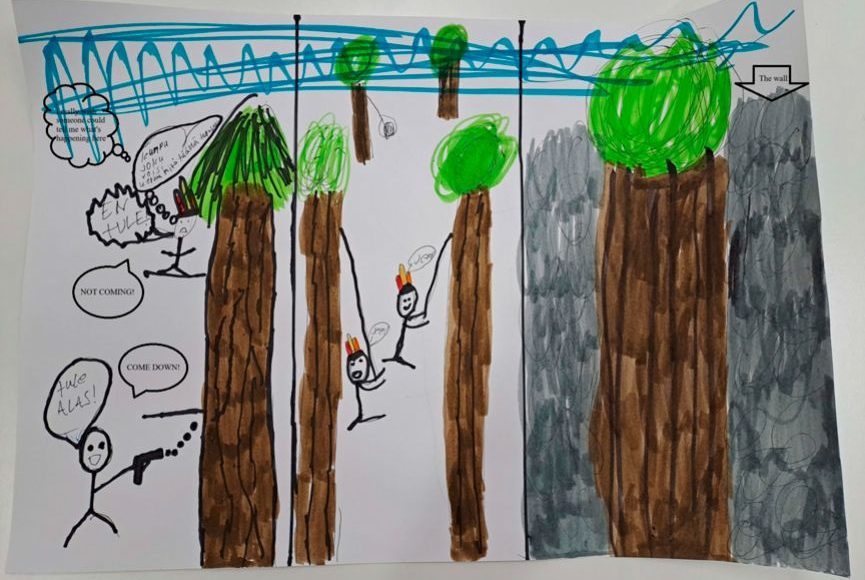
Climate change is a complex and often anxiety-inducing phenomenon, thus discussing it with children and young people requires sensitivity. For this reason, the topic was approached playfully through artistic methods. Arts-based teaching made it possible to transform difficult issues into objects of curiosity. A wide range of methods and materials were explored with the students, including coloured emotion cards, drawing and painting, reading books and stories, collages, comics, crafts, creative writing, performances, shadow theatre, a superpower game, collaborative art-making on an online platform, the creation of art CVs, process drama, and serving as guides in an art exhibition.
Experiences of people living in different parts of the world can help make climate change understandable as an issue embedded in ordinary life.
Arts-based methods made it possible to address the difficult issues embedded in climate mobility even with children as young as ten years old. Students were able to participate within their own boundaries, which helped reduce the emotional burden of the topic. Learning activities also did not require them to demonstrate learning outcomes at a rapid pace; instead, understanding was allowed to develop gradually over the course of the semester. This became evident in the different ways students engaged with the subject. Some sought to move quickly past their uncomfortable feelings, thereby bypassing the complexity of the issues involved. Others chose to remain with their feelings of discomfort for longer and accepted that these challenges might not have simple solutions. With the latter group of students, the researchers were able to explore new possibilities for understanding in more depth.
The results of the research project are encouraging for the further development of arts-based, social science oriented climate change education. Such approaches nurture students’ curiosity about challenging environmental issues and enable them to build connections with the lives of people living beyond their immediate surroundings. Further, no single method can guarantee the development of empathetic understanding since all students are different kinds of learners, hence this type of education requires the use of a variety of approaches and methods. Students also begin the process of building understanding from different starting points, which means that learning must be given time.
Challenging simplifications through empathy
In contemporary public debate, migration linked to climate change is sometimes portrayed as a security threat, with large waves of refugees moving toward Europe and the United States for instance. This perception does not reflect the reality of climate mobility. Most people affected by climate change move within their own countries or to nearby regions, and only rarely do they relocate permanently far from home. Families often adapt by combining different forms of mobility and staying in place in order to secure better living conditions. Diaspora communities also play an essential role in supporting communities whose living environments have been severely affected by climate change.
The study found that students struggled to understand the diverse forms of departure and return associated with climate change. Rather than recognizing possibilities such as returning home, the right to remain in place, or the cyclical nature of migration, they largely understood climate mobility in terms of refugeehood, where permanent relocation to another country appeared to be the only option. For example, when students were asked to reflect on a story about a child living on the slowly sinking island of Tuvalu, many regarded moving to Australia or New Zealand as an obvious solution. This completely bypassed questions about the difficulties of leaving or people’s right to remain in their homelands, even though the story strongly emphasized these themes. The concept of “loto fenua” – a deep-rooted connection relationship to the land – expressed through the voice of the protagonist’s grandfather, might be easier for Finnish children to grasp if they were more familiar with the Sámi relationship to their living environments. At present, the only indigenous peoples in the EU is represented very sparsely in the Finnish school. Strengthening this kind of multicultural understanding is essential for engaging with the perspectives of different communities in an era of climate change.
The findings on the HUMANE-CLIMATE study speak primarily about climate change education, not about children’s personal views or capabilities. If schools do not provide tools for exploring climate change from local perspectives and as a human-scale issue, opportunities for developing understanding may not arise at all. A social science perspective is therefore needed alongside natural science education.
In addition, current teaching tends to emphasize quick, individual solutions to environmental problems. Recycling, turning off lights, avoiding food waste, and other forms of individual responsibility – small everyday actions – are placed at the centre, rather than approaching climate change as a matter of shared planetary responsibility to which people and societies contribute collectively. In the students’ work, the absence of the idea of shared responsibility was particularly evident in how support for disadvantaged people was understood. Rather than being seen as a responsibility of more privileged countries and individuals, it was framed as a matter of helping, creating a hierarchical distinction between “us” and “them.” Although the willingness to help is, of course, ethically valuable in itself, it is not grounded in environmental justice but in goodwill. In this sense, helping becomes a matter of personal or societal choice rather than a moral or legal obligation.
A social science perspective is needed alongside natural science education.
However, the study provided indications that these widely held societal assumptions can be challenged through empathetic education. This was evident, for example, in a pilot project in an upper secondary school conducted before the longer period of fieldwork in primary schools. When teaching highlighted the many different places and ways in which climate change affects people’s lives, students developed a broader understanding of climate mobility. Similarly, in primary school, bringing attention to the everyday experiences of people affected by climate change helped to break down the division between helpers and those being helped. After gaining new insights into life in distant places, for example through reading a book, students were able to use artistic expression to relate to these experiences through their own lived realities. This enabled them to better understand what climate change feels like and why responses to its challenges must be sensitive to specific circumstances. Students with migrant backgrounds, in particular, seemed to have strong foundations for this kind of understanding. One student of Afghan background wrote in an essay to a boy living in the Amazon rainforest that life in the city was boring and dirty, thereby recognizing the value of the boy’s desire and right to remain in his home region despite the difficulties he faced.
Image: HUMANE-CLIMATE research project
Towards climate change education based on shared responsibility
A key finding of the HUMANE-CLIMATE project is that the lack of justice perspectives in climate change education makes it difficult for students to understand how the impacts of climate change are distributed unevenly and unfairly. In the Finnish schools, climate change education tends to emphasize individual actions rather than shared responsibility, placing a burdensome sense of climate anxiety on younger generations. Educational materials offer students few opportunities to consider ways of addressing climate change at a systemic level. More generally, climate change is presented as a natural scientific phenomenon that unfolds inevitably. Its impacts are largely positioned far removed from the everyday lives of Finns, both geographically and temporally, which strengthens the division between “us” and “them”.
The findings offer hope that climate anxiety can be mitigated through empathetic climate change education. By encouraging students to develop experiential forms of understanding, and inviting them into curious learning processes through artistic activities, attention can be redirected away from overly simplistic thinking that focuses on distant disasters, threats, and problem-solving. Such an approach not only helps students see climate change as a matter of shared responsibility for the entire planet, but also supports their ability to cope with its complexity and the uncertainties associated with it. There is no need to find a comprehensive solution here and now; it is enough to pause and engage with emerging challenges and problems.
Because climate change is an emotionally challenging and often distressing topic, it must be addressed in ways that respect students’ personal boundaries. Education should recognize the ways in which they choose to engage with climate change on their own terms. The study suggests that young people tend to be reluctant about formal forms of civic participation, including demonstrations and organized activism. Instead, they were interested in finding ways to make a difference in their everyday lives, for example through active discussion and lifestyle changes. These are valuable ways of understanding and responding to climate change, particularly when the deepening and sharing of understanding, and the change that emerges from it, takes place within intergenerational community life. A respectful attitude toward fellow students in the classroom also helps foster respectful relationships with other people more broadly. Empathetic connections between people are needed at every scale if climate justice is to be placed at the heart of climate change education and climate action.
JUUSO TARKKA, KAISLA KAREOJA, KIRSI PAULIINA KALLIO
Kallio, K. P., Bami, N., & Sulonen, M. (2025). A glaring shortage of climate mobility education: A comparative analysis of curricula and textbooks in Finnish and Greek schools. European Educational Research Journal, 14749041251390591.
https://doi.org/10.1177/14749041251390591 Kallio, K. P., Bowman, B., & Vainikka, V. (2025). (Un)Learning to Live Together in the Climate-Changed World: Young People’s Lived Planetary Citizenship. Youth and Globalization, 7(2), 203–235.
https://doi.org/10.1163/25895745-bja10053 Kallio, K. P., Häkli, J., & Härmä, K. (2024). Oikeus lähteä, oikeus jäädä, oikeus palata: Mitä ilmastokasvatuksen pitäisi kertoa muuttoliikkeestä? Terra. https://doi.org/10.30677/terra.130996
Kallio, K. P., Vainikka, V., & Häkli, J. (2026). Unlearning through art: Developing decolonising and empathic pedagogies in climate mobilities education. Childhood, 33(2), 170–191. https://doi.org/10.1177/09075682251392497
JUUSO TARKKA is a doctoral researcher at the Tampere University and a class teacher. He worked as a research assistant in the HUMANE-CLIMATE project.
KAISLA KAREOJAis the editor-in-chief of Versus. She works as a doctoral researcher in Hanken School of Economics.
KIRSI PAULIINA KALLIOis Professor of Environmental Pedagogy and Education at Tampere University. She acted as the leader of the HUMANE-CLIMATE (2022-2026) research project funded by the Research Council of Finland.
The author is a subject teacher, school coach, down-to-earth ordinary guy, and Master of Arts.
An Overwhelming, Amorphous Mass called Climate Change
School education can sometimes be a bitter pill for young students to swallow. Our globalized world is full of large and complex problems, and teaching about them involves a number of contradictions. Teachers need to convey both the seriousness of these challenges and the urgent need for future solutions, while at the same time avoiding creating feelings of hopelessness.
These global challenges are the result of the collective actions of adults and previous generations. Young people are expected to develop solutions to these problems, even though no clear or ready-made solutions exist. While it is by no means desirable for young people to become anxious or distressed, these are nevertheless challenges that future generations will have to confront. Frustratingly for young people, we have passed on global problems that we hope they will solve, even though no one can say with any certainty exactly how this should be done.
The same phenomenon applies to climate change as to many other topics in the lower secondary school curriculum: the challenge is not young people’s cognitive capacity, but their motivation. Global challenges are easily understood in young people’s minds as issues that are hopeless or beyond their influence. It is understandable if an early teenager’s psychological reaction to the awareness-raising provided by school is something along the lines of “I’m not interested, someone else will take care of it.”
Moralizing and subtle guilt-tripping are not effective ways of fostering motivation, and they often involve a degree of intellectual dishonesty. Turning off the lights in the classroom and placing handouts in the recycling bin may symbolically contribute to addressing climate change, but the actual impact of such actions is negligible. Climate change education in schools should not amount to tokenistic gestures for the sake of appearances; rather, it should cultivate understanding and empower young people to act in shaping the future.
Young people are capable of understanding and solving problems when they are presented in the right way. The HUMANE-CLIMATE research project sets an excellent example by highlighting the consequences of climate change as concrete, human-centered challenges, such as migration. An arts-based approach gives young people the space to explore and engage with a difficult and complex issue from a variety of perspectives, without creating the emotional barriers of hopelessness and moralising.
When discussing climate change with young people in a solution-oriented way, I would suggest a radical shift in approach: instead of talking about climate change as a vast, overarching problem and focusing on how to solve it, we should discuss specific, tangible phenomena, such as migration pressures and their impacts on local communities. Just as in young people’s school lives, global challenges are ultimately addressed in this way as well – one problem and one solution at a time. This approach also aligns with the phenomenon-based learning model embedded in the curriculum.
EETU SIVULA
Tanja Tuulinen
Tanja Tuulinen works as an environmental education specialist at the Economic Education Centre of Central Finland, which has a national mandate to promote environmental education. She holds a Master of Science in Agriculture and Forestry with a specialization in environmental science. She has also studied community communication, environmental education, and social psychology.
Climate change education at the human level and over time is necessary
The HUMANE-CLIMATE research project has succeeded in expanding the use of everyday-life perspectives in climate change education. Climate change has been addressed through people’s lives, but this has not meant limiting the discussion to the somewhat problematic theme of small everyday actions. Instead, the project has dared to tackle major questions as well: How are changes in climate conditions reflected, or how might they be reflected, in the everyday lives of people living in different parts of the world? What is just?
This is a welcome development. Not everyone gets interested in scientific causal chains or even the fate of other species. However, other people may spark interest, empathy, and reflections on justice and shared responsibility. Even those who are dismissive of environmental and climate issues may find a connection to the topic when it is framed through recognizable everyday concerns. Polarization and climate denialism are also evident in schoolwork, at least among older students, and therefore methods that help climate change educators navigate these challenges are needed.
The research project allowed sufficient time for learning and engagement with the topic. Climate mobility and the situations associated with it were explored from multiple perspectives. This is important, as it helps prevent other people from being reduced to a faceless outgroup, merely “those others” whose circumstances fail to spark interest or concern. Time is needed to process the insights and emotions that emerge.
Truths related to climate change, such as the negative impacts of our own lifestyles on other people’s everyday lives, are difficult to accept, even for adults. The prospects for the future are not entirely encouraging. The research project made effective use of arts-based methods, which provided the necessary flexibility and opportunities for processing emotions.
Previous research has shown that Finnish young people would like climate change education to include more philosophical discussions, stronger connections to their everyday lives, and greater attention to solutions at different levels. The climate change education provided by schools was perceived as repetitive and frustrating.
What could make high-quality, long-term climate change education possible beyond project-related environments, an integral part of everyday school life?
The national curriculum for basic education is currently being revised in Finland. One of the main drivers of the process has been a desire to define in detail what competencies are expected at each grade level and in each subject. Unfortunately, the reform must be carried out under a tight schedule, so it is probably overly optimistic to suggest that a multidisciplinary climate learning pathway, which would require teaching across subject boundaries, could be systematically incorporated into the curriculum at this stage. There is, however, a clear need for this. The current cross-curricular competence areas, valuable as they are, do not appear to have ensured that this crucial topic becomes a balanced learning experience.
What about school communities? If climate change education succeeds in awakening students’ interest and sense of shared responsibility, this may also have implications for the school community itself. Are the adults in schools prepared to engage with active young people’s well-founded initiatives and discussion openings in a spirit of shared responsibility, interest, and encouragement? And have school staff had opportunities to process their own climate-related emotions? Principals, teachers, and others who work with children and young people should have opportunities to strengthen their own climate education competencies. As the article points out, the role of schools in enabling an understanding of climate change is crucial in any case.
Discussions of shared responsibility, justice, and societal solutions may, in the current climate, encounter currents that emphasize self-interest, looking after one’s own benefit, and self-help thinking. However, this is not a reason to abandon efforts toward shared responsibility. A vision for the future of Finnish comprehensive schools published earlier this year also emphasized that children should be guided to find personal meaning in matters that benefit others as well. This vision aligns closely with high-quality climate change education. The socially engaged environmental education described in the research project supports both climate change mitigation and adaptation.
TANJA TUULINEN
Rissanen, I., Aarnio-Linnanvuori, E., Mansikka-aho, A. & De Vito, L. (2023). Challenging the Climate Crisis: Children’s Agency to Tackle Policy Underpinned by Learning for Transformation. Insights from Tampere, Finland. CCC-CATAPULT Policy Brief 1.Peruskoulu 2045: Elämää varten : Visio suomalaiselle peruskoululle. Opetus- ja kulttuuriministeriö (2026). https://urn.fi/URN:ISBN:978-952-415-029-3


What is climate change, what causes it, and what impacts does it have? In response, Mmany students would start describing the greenhouse effect and global warming: as the concentration of greenhouse gases in the atmosphere increases, heat is trapped on Earth, leading to rising temperatures, sea-level rise, and more frequent extreme weather events. While this natural science account is accurate, it does not capture harmful effects of climate change on people’s everyday lives. Hurricanes, typhoons, and wildfires, as well as more gradual changes in living conditions – such as drought and food insecurity – are already making life and livelihoods unsustainable in many places. Most importantly, a natural science account overlooks the injustices associated with climate change: those places and communities that have contributed the least to causing and advancing climate change are often the ones that suffer its consequences the most.
The unjust nature of climate change is rooted in the history of industrialisation, which is widely recognised as one of its underlying causes. Industrial development was made possible to a large extent by the growing wealth of European colonial powers, built on the exploitation of natural resources and labour in other parts of the world. These power relations continue to shape the present in many ways. Wealthier countries are generally better equipped to respond to the impacts of climate change, while its most severe consequences are felt in poorer regions. Industrial production is also distributed unevenly across the globe. Polluting factories are often located in areas with low-cost labour, while the benefits accumulate to large corporations based in wealthier countries and to their home economies. From a climate justice perspective, this broader system of unequal relations can itself be seen as a root cause of climate change.
The HUMANE-CLIMATE research project brought these perspectives into environmental education in Finnish and Greek schools. It focused on climate mobility – human movement linked to climate change – as a complex and multifaceted phenomenon. Climate mobility is one of the most significant ways in which the impacts of climate change are experienced in people’s lives. As living conditions deteriorate and livelihoods become more difficult to sustain, people may move seasonally to another region or country for work and residence. Others migrate from rural areas to cities in search of better opportunities. Among those fleeing sudden crises, some settle permanently in new locations, while others eventually return to rebuild their homes. Some communities choose to remain where they are, even when doing so requires substantial efforts to maintain viable living conditions. At the same time, some people are unable to leave because they lack the financial resources or the necessary knowledge and skills to do so.
Climate change is driving human mobility around the world, yet many privileged people hardly notice this in their own lives. For example, living across multiple locations is common among Finns. During summer heatwaves, for example, many urban residents spend extended periods in rural areas by lakes, rivers, and the sea. In winter, people travel to places with reliable snow conditions or head further south in search of milder warmer weather. Simultaneously, other Europeans experiencing increasingly intense summer heat have begun to see Finland as an attractive refuge for spending the warmer months, either on holidays or in remote work. Many people in such privileged positions, however, do not recognise that they are themselves exercising the possibility of climate mobility. By contrast, those whose movement is restricted or whose financial circumstances do not allow them to relocate bear the burden of immobility every day.
A comparative analysis of primary school curricula and textbooks found that the Finnish education system largely overlooks migration as a topic. The contrast with Greece is striking, as human mobility receives considerable attention there, both in historical contexts and in relation to contemporary society. Climate mobility, however, is not addressed to any significant extent in school education in either country. One reason identified for this gap is the strong emphasis on natural sciences in environmental education: climate change is mainly taught within STEM subjects (science, technology, engineering, mathematics) and is often presented as a phenomenon detached from people’s everyday lives. Schools also place little emphasis on climate change as a shared responsibility of societies or as an issue requiring collective stewardship of the planet. Likewise, educational materials devote limited attention to the responsibility of the wealthiest countries, whose historical and current activities have contributed most to the root causes of climate change. In addition, the harmful effects of climate change are often portrayed as distant from children’ and young people’s own lives, as threats lying in the future or as disasters occurring elsewhere in the world.
To explore the possibilities of social science based environmental education, the HUMANE-CLIMATE research project worked hands-on with schools in Finland and Greece, using arts-based approaches to foster empathetic climate change education. The aim was to help students develop a deeper understanding of the diverse circumstances and living conditions in which climate change is heavily present in people’s daily lives around the world.
Bringing empathy into climate change education
In its climate change education activities conducted in schools, the participatory research in HUMANE-CLIMATE sought to create opportunities for students to develop an empathetic understanding of migration linked to climate change. Together with fourth-grade students, the research team engaged in a shared learning process, exploring how the difficult experiences of people living in different parts of the world – as well as their everyday sources of joy and resilience – can help make climate change understandable as an issue embedded in ordinary life. The aim was to foster respectful and equitable understanding, avoiding relationships based on pity and instead emphasizing listening to the experiences and perspectives of local people. Another pedagogical objective was to challenge preconceptions about climate change and prevailing ways of thinking within Finnish and Greek societies. This transformative process may give rise to feelings of discomfort, but engaging with such emotions is intended to support a willingness to act for a more just world in an era of climate change.
Climate change is a complex and often anxiety-inducing phenomenon, thus discussing it with children and young people requires sensitivity. For this reason, the topic was approached playfully through artistic methods. Arts-based teaching made it possible to transform difficult issues into objects of curiosity. A wide range of methods and materials were explored with the students, including coloured emotion cards, drawing and painting, reading books and stories, collages, comics, crafts, creative writing, performances, shadow theatre, a superpower game, collaborative art-making on an online platform, the creation of art CVs, process drama, and serving as guides in an art exhibition.
Arts-based methods made it possible to address the difficult issues embedded in climate mobility even with children as young as ten years old. Students were able to participate within their own boundaries, which helped reduce the emotional burden of the topic. Learning activities also did not require them to demonstrate learning outcomes at a rapid pace; instead, understanding was allowed to develop gradually over the course of the semester. This became evident in the different ways students engaged with the subject. Some sought to move quickly past their uncomfortable feelings, thereby bypassing the complexity of the issues involved. Others chose to remain with their feelings of discomfort for longer and accepted that these challenges might not have simple solutions. With the latter group of students, the researchers were able to explore new possibilities for understanding in more depth.
The results of the research project are encouraging for the further development of arts-based, social science oriented climate change education. Such approaches nurture students’ curiosity about challenging environmental issues and enable them to build connections with the lives of people living beyond their immediate surroundings. Further, no single method can guarantee the development of empathetic understanding since all students are different kinds of learners, hence this type of education requires the use of a variety of approaches and methods. Students also begin the process of building understanding from different starting points, which means that learning must be given time.
Challenging simplifications through empathy
In contemporary public debate, migration linked to climate change is sometimes portrayed as a security threat, with large waves of refugees moving toward Europe and the United States for instance. This perception does not reflect the reality of climate mobility. Most people affected by climate change move within their own countries or to nearby regions, and only rarely do they relocate permanently far from home. Families often adapt by combining different forms of mobility and staying in place in order to secure better living conditions. Diaspora communities also play an essential role in supporting communities whose living environments have been severely affected by climate change.
The study found that students struggled to understand the diverse forms of departure and return associated with climate change. Rather than recognizing possibilities such as returning home, the right to remain in place, or the cyclical nature of migration, they largely understood climate mobility in terms of refugeehood, where permanent relocation to another country appeared to be the only option. For example, when students were asked to reflect on a story about a child living on the slowly sinking island of Tuvalu, many regarded moving to Australia or New Zealand as an obvious solution. This completely bypassed questions about the difficulties of leaving or people’s right to remain in their homelands, even though the story strongly emphasized these themes. The concept of “loto fenua” – a deep-rooted connection relationship to the land – expressed through the voice of the protagonist’s grandfather, might be easier for Finnish children to grasp if they were more familiar with the Sámi relationship to their living environments. At present, the only indigenous peoples in the EU is represented very sparsely in the Finnish school. Strengthening this kind of multicultural understanding is essential for engaging with the perspectives of different communities in an era of climate change.
The findings on the HUMANE-CLIMATE study speak primarily about climate change education, not about children’s personal views or capabilities. If schools do not provide tools for exploring climate change from local perspectives and as a human-scale issue, opportunities for developing understanding may not arise at all. A social science perspective is therefore needed alongside natural science education.
In addition, current teaching tends to emphasize quick, individual solutions to environmental problems. Recycling, turning off lights, avoiding food waste, and other forms of individual responsibility – small everyday actions – are placed at the centre, rather than approaching climate change as a matter of shared planetary responsibility to which people and societies contribute collectively. In the students’ work, the absence of the idea of shared responsibility was particularly evident in how support for disadvantaged people was understood. Rather than being seen as a responsibility of more privileged countries and individuals, it was framed as a matter of helping, creating a hierarchical distinction between “us” and “them.” Although the willingness to help is, of course, ethically valuable in itself, it is not grounded in environmental justice but in goodwill. In this sense, helping becomes a matter of personal or societal choice rather than a moral or legal obligation.
However, the study provided indications that these widely held societal assumptions can be challenged through empathetic education. This was evident, for example, in a pilot project in an upper secondary school conducted before the longer period of fieldwork in primary schools. When teaching highlighted the many different places and ways in which climate change affects people’s lives, students developed a broader understanding of climate mobility. Similarly, in primary school, bringing attention to the everyday experiences of people affected by climate change helped to break down the division between helpers and those being helped. After gaining new insights into life in distant places, for example through reading a book, students were able to use artistic expression to relate to these experiences through their own lived realities. This enabled them to better understand what climate change feels like and why responses to its challenges must be sensitive to specific circumstances. Students with migrant backgrounds, in particular, seemed to have strong foundations for this kind of understanding. One student of Afghan background wrote in an essay to a boy living in the Amazon rainforest that life in the city was boring and dirty, thereby recognizing the value of the boy’s desire and right to remain in his home region despite the difficulties he faced.
Towards climate change education based on shared responsibility
A key finding of the HUMANE-CLIMATE project is that the lack of justice perspectives in climate change education makes it difficult for students to understand how the impacts of climate change are distributed unevenly and unfairly. In the Finnish schools, climate change education tends to emphasize individual actions rather than shared responsibility, placing a burdensome sense of climate anxiety on younger generations. Educational materials offer students few opportunities to consider ways of addressing climate change at a systemic level. More generally, climate change is presented as a natural scientific phenomenon that unfolds inevitably. Its impacts are largely positioned far removed from the everyday lives of Finns, both geographically and temporally, which strengthens the division between “us” and “them”.
The findings offer hope that climate anxiety can be mitigated through empathetic climate change education. By encouraging students to develop experiential forms of understanding, and inviting them into curious learning processes through artistic activities, attention can be redirected away from overly simplistic thinking that focuses on distant disasters, threats, and problem-solving. Such an approach not only helps students see climate change as a matter of shared responsibility for the entire planet, but also supports their ability to cope with its complexity and the uncertainties associated with it. There is no need to find a comprehensive solution here and now; it is enough to pause and engage with emerging challenges and problems.
Because climate change is an emotionally challenging and often distressing topic, it must be addressed in ways that respect students’ personal boundaries. Education should recognize the ways in which they choose to engage with climate change on their own terms. The study suggests that young people tend to be reluctant about formal forms of civic participation, including demonstrations and organized activism. Instead, they were interested in finding ways to make a difference in their everyday lives, for example through active discussion and lifestyle changes. These are valuable ways of understanding and responding to climate change, particularly when the deepening and sharing of understanding, and the change that emerges from it, takes place within intergenerational community life. A respectful attitude toward fellow students in the classroom also helps foster respectful relationships with other people more broadly. Empathetic connections between people are needed at every scale if climate justice is to be placed at the heart of climate change education and climate action.
JUUSO TARKKA, KAISLA KAREOJA, KIRSI PAULIINA KALLIO
Main photo: HUMANE-CLIMATE research project
Literature
Kallio, K. P., Bami, N., & Sulonen, M. (2025). A glaring shortage of climate mobility education: A comparative analysis of curricula and textbooks in Finnish and Greek schools. European Educational Research Journal, 14749041251390591.
https://doi.org/10.1177/14749041251390591 Kallio, K. P., Bowman, B., & Vainikka, V. (2025). (Un)Learning to Live Together in the Climate-Changed World: Young People’s Lived Planetary Citizenship. Youth and Globalization, 7(2), 203–235.
https://doi.org/10.1163/25895745-bja10053 Kallio, K. P., Häkli, J., & Härmä, K. (2024). Oikeus lähteä, oikeus jäädä, oikeus palata: Mitä ilmastokasvatuksen pitäisi kertoa muuttoliikkeestä? Terra. https://doi.org/10.30677/terra.130996
Kallio, K. P., Häkli, J., Vainikka, V., & Tervaharju, T.-M. (2026). Resisting climate apartheid: Co-creative unlearning of climate-changed geographies. Geoforum, 175, 104748. https://doi.org/10.1016/j.geoforum.2026.104748
Kallio, K. P., Vainikka, V., & Häkli, J. (2026). Unlearning through art: Developing decolonising and empathic pedagogies in climate mobilities education. Childhood, 33(2), 170–191. https://doi.org/10.1177/09075682251392497
JUUSO TARKKA is a doctoral researcher at the Tampere University and a class teacher. He worked as a research assistant in the HUMANE-CLIMATE project.
KAISLA KAREOJA is the editor-in-chief of Versus. She works as a doctoral researcher in Hanken School of Economics.
KIRSI PAULIINA KALLIO is Professor of Environmental Pedagogy and Education at Tampere University. She acted as the leader of the HUMANE-CLIMATE (2022-2026) research project funded by the Research Council of Finland.
Read the commentaries:
Eetu Sivula
The author is a subject teacher, school coach, down-to-earth ordinary guy, and Master of Arts.
An Overwhelming, Amorphous Mass called Climate Change
School education can sometimes be a bitter pill for young students to swallow. Our globalized world is full of large and complex problems, and teaching about them involves a number of contradictions. Teachers need to convey both the seriousness of these challenges and the urgent need for future solutions, while at the same time avoiding creating feelings of hopelessness.
These global challenges are the result of the collective actions of adults and previous generations. Young people are expected to develop solutions to these problems, even though no clear or ready-made solutions exist. While it is by no means desirable for young people to become anxious or distressed, these are nevertheless challenges that future generations will have to confront. Frustratingly for young people, we have passed on global problems that we hope they will solve, even though no one can say with any certainty exactly how this should be done.
The same phenomenon applies to climate change as to many other topics in the lower secondary school curriculum: the challenge is not young people’s cognitive capacity, but their motivation. Global challenges are easily understood in young people’s minds as issues that are hopeless or beyond their influence. It is understandable if an early teenager’s psychological reaction to the awareness-raising provided by school is something along the lines of “I’m not interested, someone else will take care of it.”
Moralizing and subtle guilt-tripping are not effective ways of fostering motivation, and they often involve a degree of intellectual dishonesty. Turning off the lights in the classroom and placing handouts in the recycling bin may symbolically contribute to addressing climate change, but the actual impact of such actions is negligible. Climate change education in schools should not amount to tokenistic gestures for the sake of appearances; rather, it should cultivate understanding and empower young people to act in shaping the future.
Young people are capable of understanding and solving problems when they are presented in the right way. The HUMANE-CLIMATE research project sets an excellent example by highlighting the consequences of climate change as concrete, human-centered challenges, such as migration. An arts-based approach gives young people the space to explore and engage with a difficult and complex issue from a variety of perspectives, without creating the emotional barriers of hopelessness and moralising.
When discussing climate change with young people in a solution-oriented way, I would suggest a radical shift in approach: instead of talking about climate change as a vast, overarching problem and focusing on how to solve it, we should discuss specific, tangible phenomena, such as migration pressures and their impacts on local communities. Just as in young people’s school lives, global challenges are ultimately addressed in this way as well – one problem and one solution at a time. This approach also aligns with the phenomenon-based learning model embedded in the curriculum.
EETU SIVULA
Tanja Tuulinen
Tanja Tuulinen works as an environmental education specialist at the Economic Education Centre of Central Finland, which has a national mandate to promote environmental education. She holds a Master of Science in Agriculture and Forestry with a specialization in environmental science. She has also studied community communication, environmental education, and social psychology.
Climate change education at the human level and over time is necessary
The HUMANE-CLIMATE research project has succeeded in expanding the use of everyday-life perspectives in climate change education. Climate change has been addressed through people’s lives, but this has not meant limiting the discussion to the somewhat problematic theme of small everyday actions. Instead, the project has dared to tackle major questions as well: How are changes in climate conditions reflected, or how might they be reflected, in the everyday lives of people living in different parts of the world? What is just?
This is a welcome development. Not everyone gets interested in scientific causal chains or even the fate of other species. However, other people may spark interest, empathy, and reflections on justice and shared responsibility. Even those who are dismissive of environmental and climate issues may find a connection to the topic when it is framed through recognizable everyday concerns. Polarization and climate denialism are also evident in schoolwork, at least among older students, and therefore methods that help climate change educators navigate these challenges are needed.
The research project allowed sufficient time for learning and engagement with the topic. Climate mobility and the situations associated with it were explored from multiple perspectives. This is important, as it helps prevent other people from being reduced to a faceless outgroup, merely “those others” whose circumstances fail to spark interest or concern. Time is needed to process the insights and emotions that emerge.
Truths related to climate change, such as the negative impacts of our own lifestyles on other people’s everyday lives, are difficult to accept, even for adults. The prospects for the future are not entirely encouraging. The research project made effective use of arts-based methods, which provided the necessary flexibility and opportunities for processing emotions.
Previous research has shown that Finnish young people would like climate change education to include more philosophical discussions, stronger connections to their everyday lives, and greater attention to solutions at different levels. The climate change education provided by schools was perceived as repetitive and frustrating.
What could make high-quality, long-term climate change education possible beyond project-related environments, an integral part of everyday school life?
The national curriculum for basic education is currently being revised in Finland. One of the main drivers of the process has been a desire to define in detail what competencies are expected at each grade level and in each subject. Unfortunately, the reform must be carried out under a tight schedule, so it is probably overly optimistic to suggest that a multidisciplinary climate learning pathway, which would require teaching across subject boundaries, could be systematically incorporated into the curriculum at this stage. There is, however, a clear need for this. The current cross-curricular competence areas, valuable as they are, do not appear to have ensured that this crucial topic becomes a balanced learning experience.
What about school communities? If climate change education succeeds in awakening students’ interest and sense of shared responsibility, this may also have implications for the school community itself. Are the adults in schools prepared to engage with active young people’s well-founded initiatives and discussion openings in a spirit of shared responsibility, interest, and encouragement? And have school staff had opportunities to process their own climate-related emotions? Principals, teachers, and others who work with children and young people should have opportunities to strengthen their own climate education competencies. As the article points out, the role of schools in enabling an understanding of climate change is crucial in any case.
Discussions of shared responsibility, justice, and societal solutions may, in the current climate, encounter currents that emphasize self-interest, looking after one’s own benefit, and self-help thinking. However, this is not a reason to abandon efforts toward shared responsibility. A vision for the future of Finnish comprehensive schools published earlier this year also emphasized that children should be guided to find personal meaning in matters that benefit others as well. This vision aligns closely with high-quality climate change education. The socially engaged environmental education described in the research project supports both climate change mitigation and adaptation.
TANJA TUULINEN
Takaisin ylös ↑